
Why this matters right now (18 July 2026)
Mid‑July is a common point for catering teams to switch gears: some sites reduce hours, some pause production, and others pivot into summer events. In Suffolk, the county term-date calendar shows the summer term ending on Monday 20 July 2026—so this weekend sits right on the edge of a major operational change for schools and many education-adjacent caterers. (suffolk.gov.uk)
This isn’t about weather-driven panic or “extra” legal obligations. It’s about a predictable operational pattern: when teams are stretched, rotas change, or kitchens temporarily close, small gas-and-ventilation issues get missed—then show up as reopening delays, nuisance shut-downs, or paperwork gaps.
This article gives a practical close-down routine you can run after your final service before a planned lull (anything from a couple of days to several weeks). It is written for UK commercial kitchens and mobile catering operators, with examples relevant to operators in and around Suffolk and wider East Anglia.
Ground rules: what staff can do—and what must be left to a qualified engineer
In commercial kitchens, gas safety is a management responsibility: you must make sure gas appliances and flues are safe, that ventilation is adequate, and that ventilation and gas supplies are appropriately interlocked where required. HSE guidance for employers emphasises adequate ventilation (don’t block air inlets; don’t obstruct flues) and notes that in industrial/commercial plant the gas supply should be interlocked with ventilation for the appliance. (hse.gov.uk)
Kitchen teams can carry out sensible, non-invasive checks and housekeeping (visual checks, cleaning access points you’re meant to clean, record-keeping, isolating appliances only if your site procedure allows and you are trained).
Kitchen teams must not make changes to gas equipment. Do not attempt repairs, adjustments, or any form of leak testing. If something doesn’t look right, stop and arrange a suitably qualified Gas Safe registered engineer.
The “last service” close-down routine (60–90 minutes that saves hours later)
Use this as a structured sweep. The goal is to leave the kitchen in a known, well-documented state, so whoever reopens can verify the essentials quickly. If you operate multiple sites, print this routine as a one-page sign-off and keep it with your compliance folder.
-
Document what you’ve got (10 minutes) - Take date-stamped photos of: the cooking line, any open-flued/room-sealed appliances’ visible flue routes (where accessible), the gas interlock panel status, and the canopy/extract controls. - Record: which appliances were used in the final service, any faults noticed, and any temporary workarounds that were used for non-gas items (e.g., “prep moved to cold section”). - File your most recent service/maintenance notes and any current gas safety records where the duty holder can find them quickly.
-
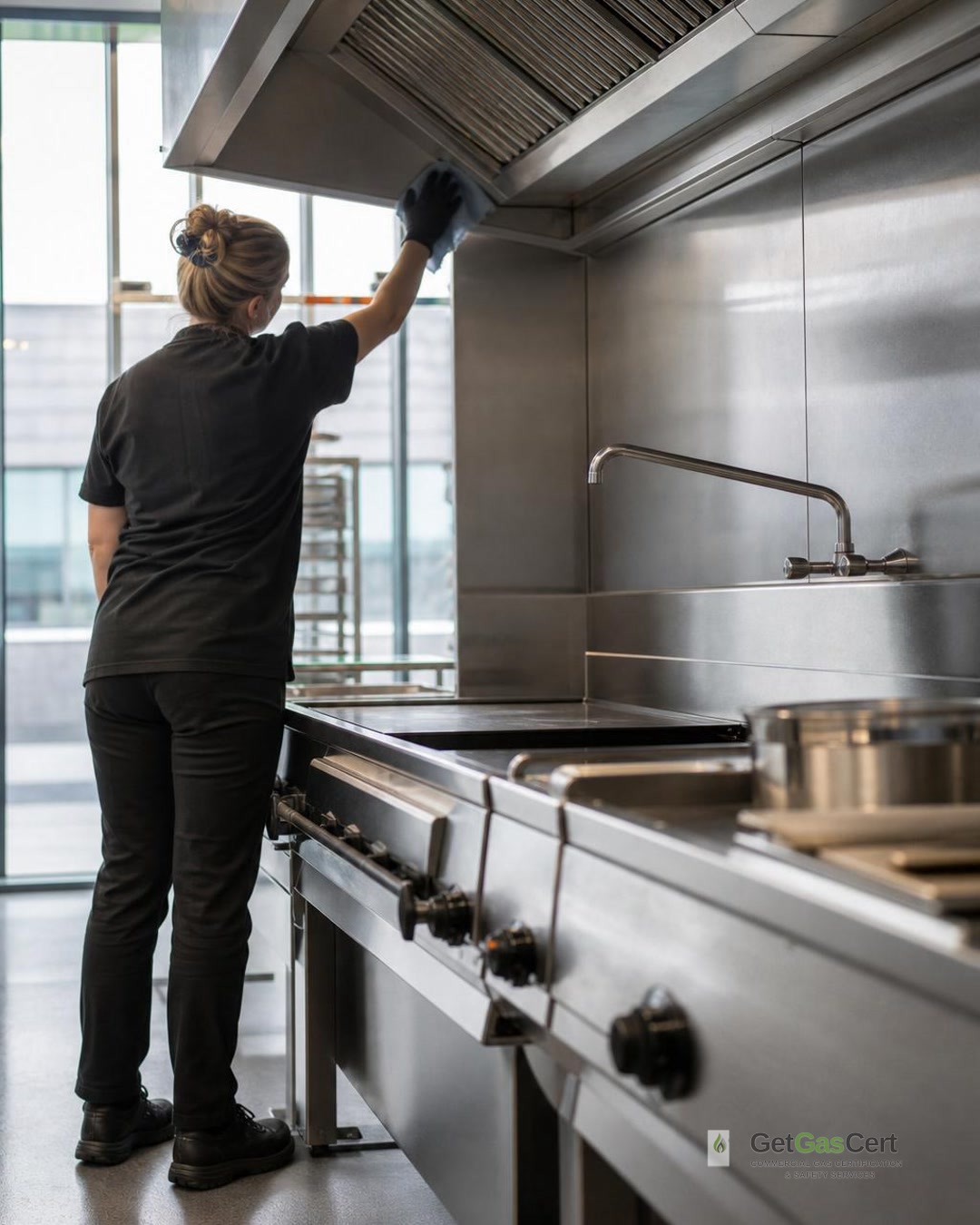
Check ventilation is not compromised (10–15 minutes) HSE’s catering ventilation guidance is clear in principle: ventilation must be effective, maintained, and used properly; poor ventilation creates safety and health risks. (hse.gov.uk) - Confirm air inlets are not blocked by cardboard, foil, packaging, or “temporary” stock. - Confirm supply and extract grilles are not taped over or deliberately restricted. - Confirm canopy filters that are designed to be removed by staff are seated correctly after cleaning (no gaps around edges). - Note anything that suggests airflow has degraded (persistent smoke/steam escape, unusual heat build-up, staff propping doors open routinely to cope). These are triggers to book a ventilation review rather than “push through” next time.
Close-down checks that prevent reopening-day surprises
When kitchens pause for a week or more, reopening problems often come from “simple” causes: blocked vents, missing records, or a latent ventilation fault that becomes obvious once full production resumes. Use these checks to reduce that risk.
A) Flues and combustion air: only a visual, non-invasive check HSE guidance for employers stresses not obstructing flues/chimneys and not blocking air inlets. (hse.gov.uk) - Confirm nothing is stored against flue routes, inspection hatches, or appliance ventilation openings. - Confirm ceiling tiles/hatches that provide access to routes are not jammed shut by stored items. - If you see staining, soot, new corrosion, or a dislodged-looking flue joint: stop and escalate. Do not attempt to reseat, tape, or “make good” anything yourself.
B) Gas safety records and who needs what Even where a formal landlord gas safety check may not be required for every scenario, HSE strongly recommends maintaining and servicing gas appliances as manufacturers recommend, and highlights duties in landlord-like situations (for example, where accommodation/tenancy duties apply). (hse.gov.uk) Practical steps: - Keep your latest gas safety paperwork and service records together. - Note any appliances that are new, replaced, moved, or taken out of use since the last record—these changes are where paperwork gaps most often appear. - If your venue has multiple duty holders (ops manager, facilities, landlord, managing agent), confirm who holds the definitive compliance file before your team disperses for summer leave.
C) Planned maintenance window booking This is the single biggest “close-down win”: use the lull to plan competent checks rather than relying on emergency call-outs in the first busy week back. - If you’re a school/college caterer near Ipswich or across Suffolk, the days immediately after term ends can be a practical maintenance window because service pressure often drops. - Book the right thing: gas safety certification, interlock testing, and any ventilation/extraction checks your risk assessment requires (especially if staff have reported heat/smoke issues or if menus have changed significantly).
If you’re staying open through late July: a lightweight ‘high workload’ control list
Not every operator slows down in late July—coastal trade and events can do the opposite. Met Office regional forecasting for the East of England around mid‑July 2026 notes that later July may bring a greater chance of rain/showers or thunderstorms compared with earlier in the month. (weather.metoffice.gov.uk)
Weather isn’t a compliance trigger by itself, but it can influence day-to-day conditions (door management, make-up air patterns, humidity/odour complaints, and how hard ventilation has to work). Use this as a lightweight operational control list during busy spells:
- Keep air inlets clear even when you’re trying to manage draughts. - Start extract before cooking begins and keep it running per site procedure. - If staff report persistent headaches, nausea, dizziness, unusual fumes, or heat stress concerns, treat it as a safety signal: stop, ventilate, and escalate to management and competent professionals. - Never allow anyone to tamper with, alter or interfere with interlock systems or safety controls. - If the extract system isn’t performing as normal, do not “push through” on gas equipment—escalate and arrange qualified support.
Common close-down mistakes (and better alternatives)
-
‘We’ll file the paperwork later.’ Better: take five minutes now. Put all gas/ventilation records in one folder (physical or digital) and make the reopening manager the named owner.
-
Blocking vents to keep pests out. Better: use approved pest-control measures and keep vents clear. Blocking ventilation can create safety risks and conflicts with HSE ventilation guidance principles. (hse.gov.uk)
-
Treating nuisance shut-downs as ‘just the interlock being annoying’. Better: treat any unexpected shut-down or persistent fault indication as a maintenance signal. Interlocks exist to link safe ventilation conditions to gas use in commercial catering contexts. (hse.gov.uk)
-
Making equipment swaps without thinking about the compliance knock-on. Better: if you swap a cooker, add a higher‑rate appliance, move kit, or change the cookline layout, plan for competent review. Changes can affect ventilation demand, commissioning expectations, and the documentation you’ll need for an audit-ready file.
A simple “reopen-ready” handover note (copy/paste template)
Use this as a handover email/WhatsApp to your manager or facilities lead. Keep it factual and short.
Template: - Site: [name] - Date last service run: 18/07/2026 (or your actual date) - Appliances used: [list] - Known issues observed: [none / list] - Ventilation status: [normal / concerns noted] - Interlock status: [normal indication / fault indication / not checked] - Filters cleaned/changed: [yes/no, when] - Paperwork location: [folder/path] - Recommended booking actions: [gas safety certification / interlock test / ventilation engineer review] - Priority notes for reopening: [e.g., ‘Do not store stock near air inlets’, ‘Check canopy controls before first cook’]
How GetGasCert can help (book the right service, at the right time)
If you’re planning a close-down, a reopening, or a summer maintenance window for a commercial kitchen in East Anglia (including Suffolk), you’ll usually get the smoothest outcome by booking proactive checks rather than waiting for a reopening-day problem.
GetGasCert supports commercial kitchen operators with services such as commercial kitchen gas certification, commercial gas certificates, gas interlock testing, and extraction and ventilation support. Always ensure work is carried out by a suitably qualified Gas Safe registered engineer where required, and keep records audit-ready for your duty holder.